Shock loss after the transplant is one of the less preferred consequences. Usually, people want to get a hairy look right after the procedure, yet all patients face more or less shock hair loss. What shock hair loss is? What are the reasons? When does it start? When does it pass?
What is Shock Hair Loss and Why Does It Occur?
As mentioned, the FUE hair transplant is grafts extraction method done by harvesting hair one by one from the donor area and its implantation on recipient area. These interventions are considered trauma, even if it is not very big. Capillary vessels that nourish hair roots are damaged during the surgery. The normal state of the skin and roots is affected, in other words, hair roots go through shock. Only ⅓ part of the hair nourishes it to live and when hair undergoes trauma, it tends to self-preservation.
Hair root part under the skin gets nourished and rest of the follicle is lost due to lack of nutrition. In other words, it enters the winter sleep. This process is called shock loss after the hair transplant. In the medical literature, this condition is named telogen effluvium. It is one of the body’s defense mechanisms.
Additionally to that, patients with genetic hair loss problems may also loose roots which are to fall out as they are too weak and thin during this phase.
There are two types of hair loss after hair transplant
- Donor area hair loss
- Recipient area hair loss
Donor Area Shock Loss
Shock loss on the donor area is a regular outcome. However, if too many grafts are harvested from the above ear zone this causes intense hair loss. Bad hair transplant is a consequence. A wide punch can also result in intensive shock loss. Usually, hair loss is often met in the FUE technique, while there are almost no such problems with the FUT.
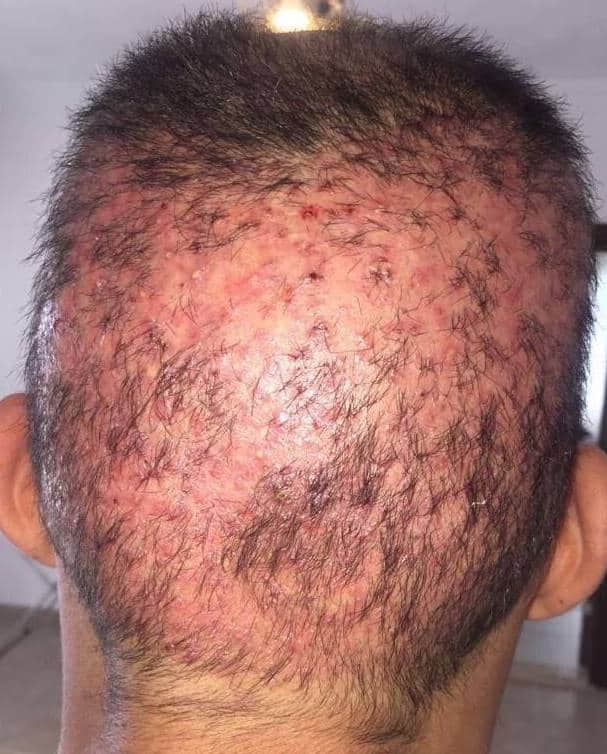
In the picture below you can see permanent hair loss in the donor area. Unfortunately, the new hair will not grow due to over-harvesting.
Hair Loss on the Recipient Area
Shock loss may occur after hair transplant on recipient hairless areas or in density increase procedures. In this case, miniaturized hair can also fall out.
When Does the Hair Loss Occur and End?
The skin scabs fall out in 10 days after the surgery. Patients enjoy desired look of the hair during this period, but it does not last long. In 15-20 days the hair starts falling out. Moreover, hair loss gets very intense on the 25th-30th day. For those who wonder how long the shock loss lasts, the answer is around 2 months.
Moreover, shock loss intensity is different in every person. Some undergo it in less rate. Others lose almost all of the hair. This period is regarded as one of the most frustrating.
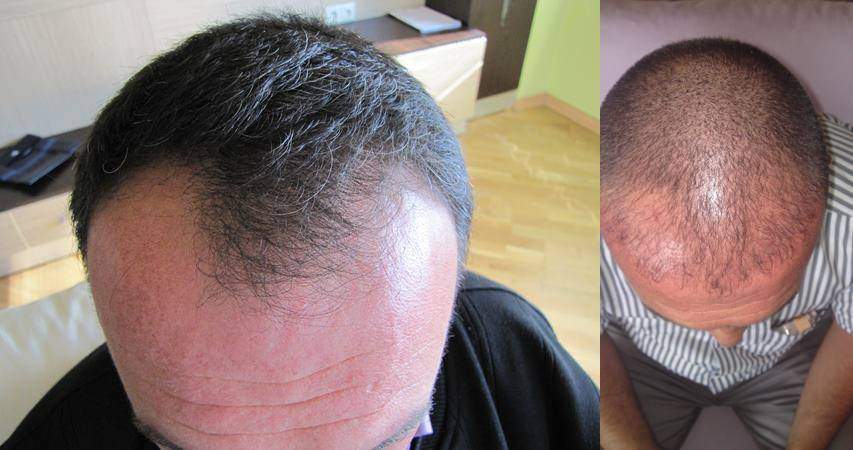
Pictures below show before hair transplant and the shock loss after 3 months.
When Does the Lost Hair Grow Back?
The shock loss usually continues for 2 months. This period is not very pleasant and is called ‘the ugly duckling’. In some patients it lasts for 3-4 months. The very first hair is very weak and thin like baby hair.
7 Factors that Affect Shock Loss
None of the patients wants to face shock loss, or at least wish to get through it at a lower range. There are some factors that increase or reduce shock hair loss. These factors are proved scientifically. However, the data was collected based on the statistics taken from operated hair transplants. It is worth remembering that there is no chance to escape from shock loss. The factors:
- Age: The shock hair loss range is higher in younger people’s hair transplants. At the later ages, the androgenic tension decreases and this causes less hair loss.
- Very Dense Hair Implant. Hair implantation more than adequate causes trauma for capillary vessels. As a consequence, the hair roots do not get nourishment and fall out.
- Parallel to Current Hairs. This is very important in density increase procedures. Newly implanted hair must be parallel to maintaining roots, otherwise, there will be damages causing hair loss.
- Opened Channels Angles. Too wide tips always mean bigger trauma. The more capillary vessels get damaged, the more hair ends falling out.
- Amount of Adrenaline. Adrenaline is usually used in the channel method to decrease bleeding. Moreover, local anesthesia also contains it. Inaccurate use of adrenaline increases the risk of necrosis and hair loss. As the pen implanter method does not require adrenaline, hair loss occurs in a low ebb. It is also important to avoid the injection of huge doses of local anesthesia to minimize shock hair loss.
- Use of Finasteride and Minoxidil. The use of finasteride and minoxidil before and after hair transplantation has been proved to reduce shock loss.
- Mega Sessions. Big amount of hair extraction and implantation increases hair loss. Mega sessions mean significant trauma to capillary vessels and the use of a large amount of adrenaline. Additionally, extracted hair grafts remain outside of the skin for a long time. The ideal number per session is up to 2.000 grafts. If there is a need for more, the operation can be split into several sessions.
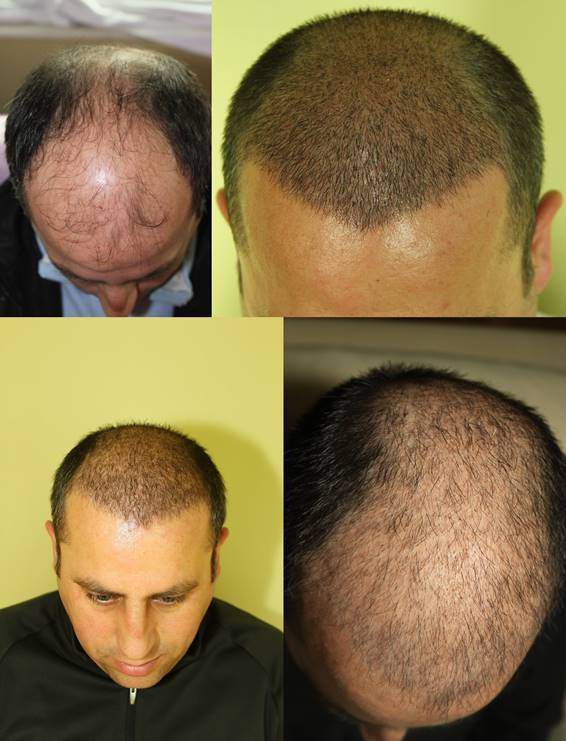
The picture below illustrates the state before hair transplant and shock loss in 15 days, 1 month, 3 months.
References
- Localized Telogen Effluvium Following Hair Transplantation Ann Dermatol. 2018 Apr; 30(2): 214–217. https://anndermatol.org/DOIx.php?id=10.5021/ad.2018.30.2.214
This article is for information only and does not replace an individual medical assessment. Published: 29.06.2020 · Last updated: 27.09.2026